Death and resurrection
Doctor ZhivagoDeath and resurrection in this episode are not distant theological opposites but forces felt at once: while delirious with typhus, Yurii Andreievich Zhivago imagines the earth assailing the deathless incarnation of love, yet finds spring, Mary Magdalene, and life equally near. The poem that emerges from his illness, “Turmoil,” gives imaginative form to the interval between entombment and resurrection, and his recovery turns that interval into a call to wake and rise.
Illness and the poem’s emergence
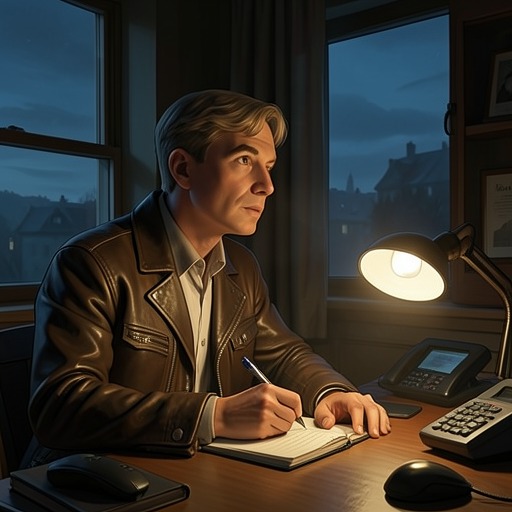
During two weeks of delirium, Yurii dreams that Tonia has placed two streets on his desk, Sadovaia Karetnaia on one side and Sadovaia Triumphalnaia on the other, and lit a lamp. The warm orange glow makes writing possible. The scene joins domestic care to artistic awakening: with Tonia’s light around him, he writes eagerly what he had long wanted to say but had never been able to express.
His imagined writing is interrupted by a boy in an unbuttoned reindeer coat, fur side out, whose narrow Kirghiz eyes recall the Urals or Siberia. Yurii knows the boy as the spirit of his death, even as the boy seems to help him write. The contradiction unsettles any simple division between destruction and creation: death is present not only as the threat of bodily ending but also, mysteriously, as an aid to the work that gives experience form.
“Turmoil” and the interval between endings
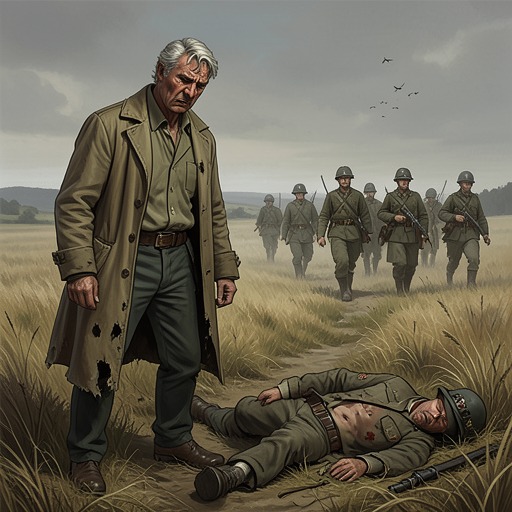
The poem’s subject is neither entombment nor resurrection itself, but the days between them; Yurii gives it the title “Turmoil.” Its central image is the earth’s three-day assault on the deathless incarnation of love. The black, raging, worm-filled earth storms it with rocks and rubble, advancing and retreating like waves that leap against a coast, cover it, and submerge it. Resurrection is therefore approached through an interval of violent pressure, not treated as an event that makes death or corruption disappear.
The poem’s imagery holds opposing realities in immediate contact. Hell, dissolution, corruption, and death are near Yurii, but so are spring, Mary Magdalene, and life. The nearness matters: renewal does not follow as a clean break from decay. Instead, the poem locates the possibility of resurrection within a world still crowded by the forces that seem to deny it.
Awakening and recovery
Two lines recur in Yurii’s mind: “We are glad to be near you,” and “Time to wake up.” The first expresses a closeness that is difficult to divide into welcome and threat; the second converts the poem’s spiritual tension into a practical summons. Wake, get up, arise: Yurii’s movement toward resurrection is phrased as an action that passes from poetic vision toward bodily return.
As he begins to recover, however, consciousness does not return all at once. At first he takes everything for granted, remembers nothing, and cannot connect one thing with another. The comforts Tonia gives him—white bread and butter, sugared tea, and coffee—seem to him like poetry or fairy tales, things naturally right for a convalescent. His subsequent wondering marks a gradual return to thought. In this sequence, resurrection is not only the poem’s religious subject: it also names the slow reawakening of perception after illness.
Artistic and spiritual significance
“Turmoil” makes artistic creation part of the episode’s account of survival. The dream lamp enables Yurii to write, while the figure he associates with death paradoxically helps him do so. The poem does not resolve that paradox by dismissing death; it allows death, corruption, and life to occupy the same imaginative space, then makes the call to wake an answer to their proximity.
The episode’s structure reinforces that meaning. Delirium gives rise to a vision; the vision becomes a poem about the interval between entombment and resurrection; and the poem’s recurring summons leads into the slow, incomplete return of ordinary consciousness. Death and resurrection thus describe both the poem’s religious subject and the form of Yurii’s experience: life re-emerges through a crisis in which the boundary between destruction and renewal cannot be taken for granted.